
Why you might have Anxiety and not ADHD
Why you might have Anxiety and not ADHD
By Mark Howell, Co-Founder of MindHealth
Book free initial consultation
ADHD is a difficult thing to manage, it’s also seen a sharp increase in public awareness in the past 5 years. There are about 150,000 ADHD google searches a month and Therapists are seeing more and more people who, having experienced a racing mind and difficult concentration, are coming to sessions saying they’re worried they have ADHD.
The problem is that a racing mind and difficulty concentration can also be symptoms of anxiety, especially Generalised Anxiety Disorder (GAD). If therapists start trying to help someone with ADHD, but the problem is actually GAD, they’re not going to be much help at all. It’s a very different type of treatment, so the key question is how can we tell them apart and how can we address them.
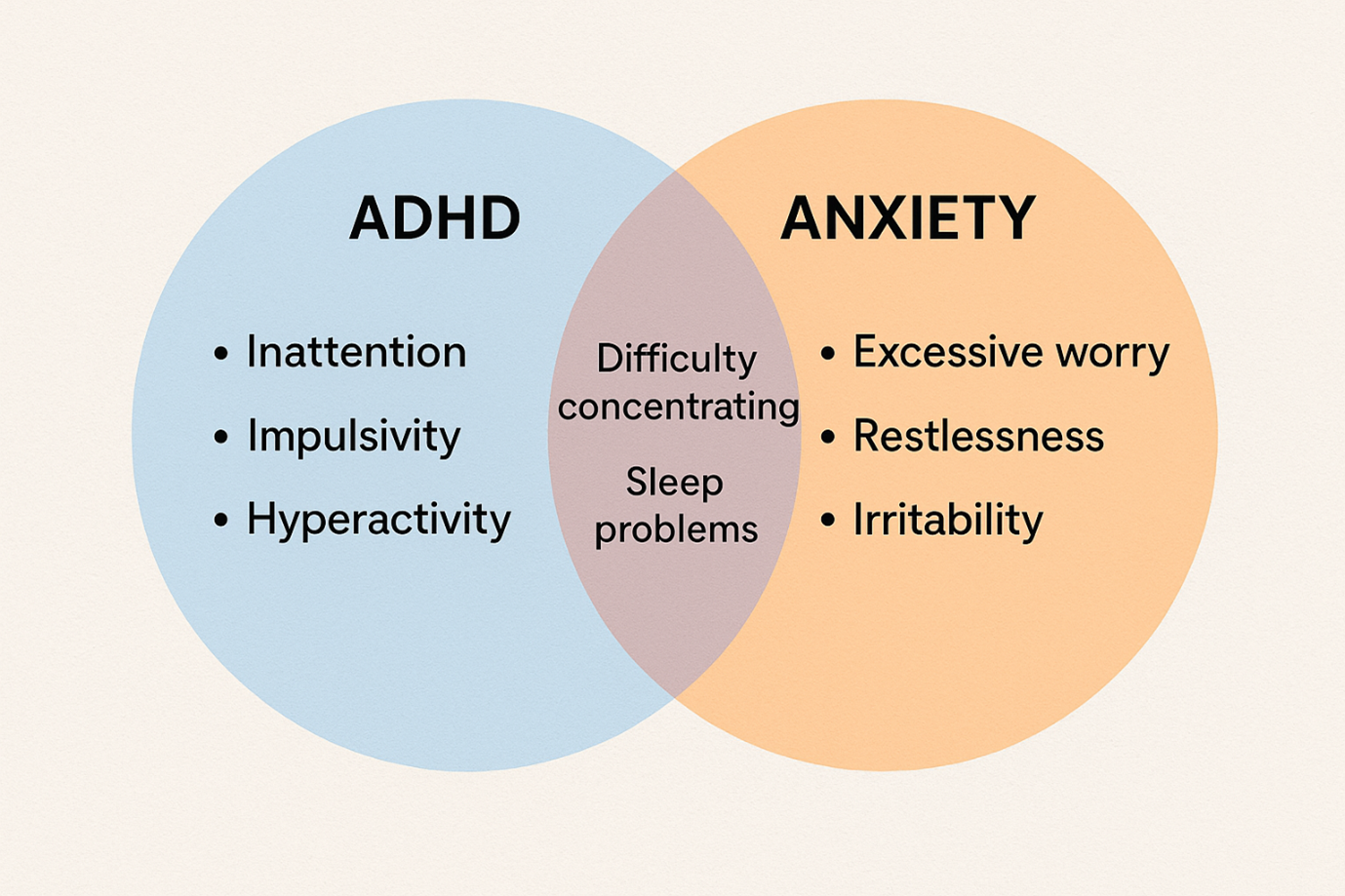
There’s quite a bit of overlap as the diagram suggests, but there are some very tell-tale differences
1. Time of onset.
ADHD tends to be identified in the classroom. People with ADHD find school very difficult. Most people find school difficult to some extent, but people who have ADHD find it almost impossible to bear the structures and the timetable requirements. They will struggle to pay any consistent attention at all and may well have experienced a teacher who finds them ‘behaviourally challenging.’ Unfortunately, people can often get labelled as lazy or indisciplined as children. GAD, on the other hand, tends to have a later onset, a gradually increasing sense of worry and anxiety in adulthood. GAD can start at any age, but adulthood is most common. So if you found school boring and annoying, but not unbearable, and your mind became increasingly worried in adulthood then it’s more likely to be GAD
2. Key Behavioural differences.
Symptoms such as hyperactivity and impulsivity are at the core of ADHD. We’re not talking about occasionally splurging on some nice clothes, or going for that chocolate bar, it’s more like sudden waves of energy leading to behaviours that could be quite risky. People with ADHD will often suddenly do something quite unexpected and start a task without any planning. They may have great difficulty planning ahead or saving money. This contrasts with people who have GAD, they may be much more risk averse, more likely to save, more likely to plan scrupulously before doing anything.
3. The physical signs.
ADHD often causes people to feel sudden and deep losses of motivation. It’s quite possible that they will stay in bed all day. They can find the experience of life very chaotic, finding it hard to organise, finding routine difficult and often getting into patterns of doing very little with occasional outbursts of hyperactivity. For GAD it’s different, people tend to have a general sense of physical tension, motivated but worried and procrastinating. People with GAD tend to have a pretty consistent routine.
GAD tends to get less coverage in the media at the moment, although it’s actually more prevalent. Recent estimates suggest that about 6% of the UK population has GAD at any given time, while about 3-4% have ADHD. This means the prior probabilities are in favour of GAD. Almost twice as many people have it, so if your mind is racing then the chances are that it’s GAD, before you’ve considered anything else.
None of this rules out the possibility of having both, even then the best thing is to start by tackling the one that affects you most. The good news is that both can be helped. The approaches are very different. With ADHD, it’s a form of neurodivergence that you don’t need to remove, but with the right approach, someone can learn to make it work for them. Anxiety is different, it gets in the way by making us avoid things we think are risky. CBT can help people to understand anxiety and overcome it. Either way, there is strong evidence that CBT helps people.
At MindHealth, we have experienced therapists, who can help you differentiate problems, then support you to change or overcome them.
About the author
Mark is Co-Founder of MindHealth, a Deputy NHS Clinical Lead, EMDR therapist, and researcher. He brings extensive clinical experience to his work, with a particular interest in trauma, psychological wellbeing, and evidence-based practice. Alongside his clinical role, Mark is committed to making psychological knowledge more accessible through research-informed resources and writing.